
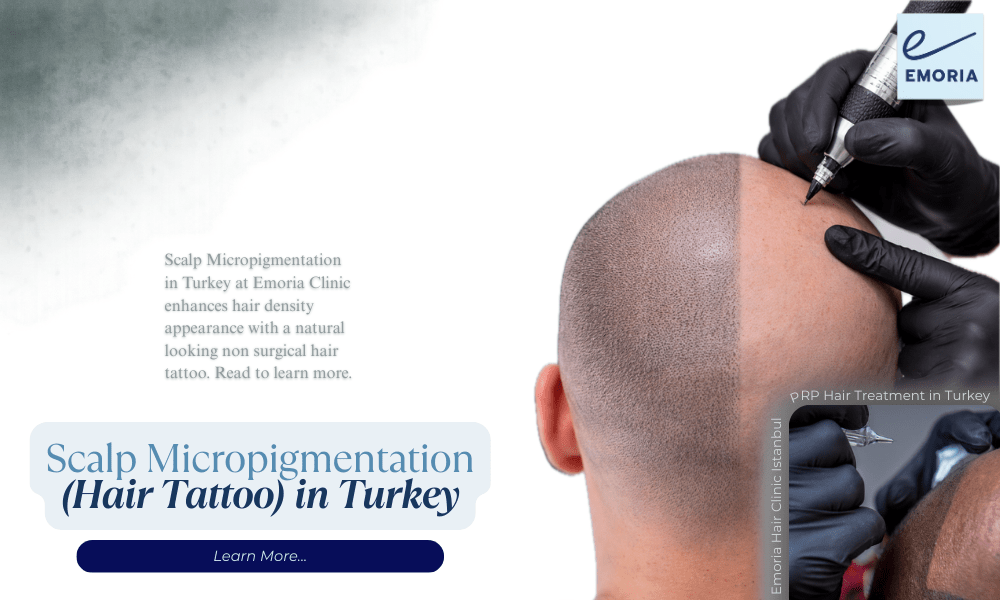
Hair loss does not always require surgery. For many men and women, the primary concern is not growing new hair but improving the appearance of density, symmetry and overall scalp aesthetics. Scalp Micropigmentation in Turkey, also known as Hair Tattoo, has become a highly effective non surgical solution for this purpose.
At Emoria Clinic, Scalp Micropigmentation is offered as a standalone cosmetic procedure or as a complementary treatment to advanced Hair Transplant Methods. The goal is to create a natural looking illusion of hair density while respecting facial structure, hairline design and long term visual harmony.
What Is Scalp Micropigmentation?
Scalp Micropigmentation is a non surgical cosmetic procedure that involves depositing medical grade pigment into the upper layers of the scalp. These micro impressions replicate the appearance of natural hair follicles, creating the illusion of fuller hair or a clean shaved look.
Unlike traditional tattooing, Hair Tattoo uses specialized equipment, pigments and techniques designed specifically for the scalp. The pigments are matched to the patient’s natural hair color and skin tone to ensure realistic and long lasting results.
How Scalp Micropigmentation Works
The success of Scalp Micropigmentation depends on precision, depth control and artistic design. Pigment is applied superficially to mimic the size, shape and distribution of real hair follicles.
Key characteristics of the procedure include:
Micro level pigment placement
Controlled depth to prevent color migration
Natural follicle pattern replication
Customized hairline and density design
Because the treatment focuses on visual enhancement rather than follicle regeneration, results are immediate and do not depend on biological hair growth cycles.
Who Is a Good Candidate for Scalp Micropigmentation?
Scalp Micropigmentation is suitable for a wide range of patients, including those who:
Experience advanced hair loss or complete baldness
Have Diffuse Thinning and want improved density appearance
Suffer from visible scars after FUE Hair Transplant or DHI Hair Transplant
Want to camouflage donor or recipient area scars
Are not Suitable for a Hair Transplant
Prefer non surgical Alternatives to Hair Transplant
It is also commonly chosen by patients who want a consistent shaved look without daily maintenance.
Scalp Micropigmentation vs Hair Transplant
While both procedures aim to improve hair aesthetics, Scalp Micropigmentation and hair transplantation serve different purposes.
Scalp Micropigmentation:
Non surgical
Immediate visual results
No downtime
Does not add real hair
Hair transplantation methods such as Sapphire FUE, Ice FUE Hair Transplant or Neograft Hair Transplant:
Surgical procedures
Require recovery time
Add real Hair Graft units
At Emoria, these methods are often combined. For example, Scalp Micropigmentation can be used after a Second Hair Transplant to enhance density perception or to correct uneven areas.
Scalp Micropigmentation Procedure at Emoria Clinic
At Emoria Clinic, Scalp Micropigmentation is performed by trained professionals with experience in both cosmetic pigmentation and hair restoration aesthetics.
Step by Step Scalp Micropigmentation Process
Detailed consultation and scalp analysis
Hairline and density planning
Pigment color selection
First SMP session for base density
Follow up sessions for refinement and layering
Most patients require 2 or 3 sessions, spaced 7 to 14 days apart, to achieve optimal density and color consistency.
How Long Does Scalp Micropigmentation Last?
Scalp Micropigmentation results are long lasting but not permanent. Pigments gradually fade over time due to natural skin regeneration and sun exposure.
Typical longevity:
3 to 5 years before a touch up may be required
Regular scalp care and sun protection help preserve results and color stability.
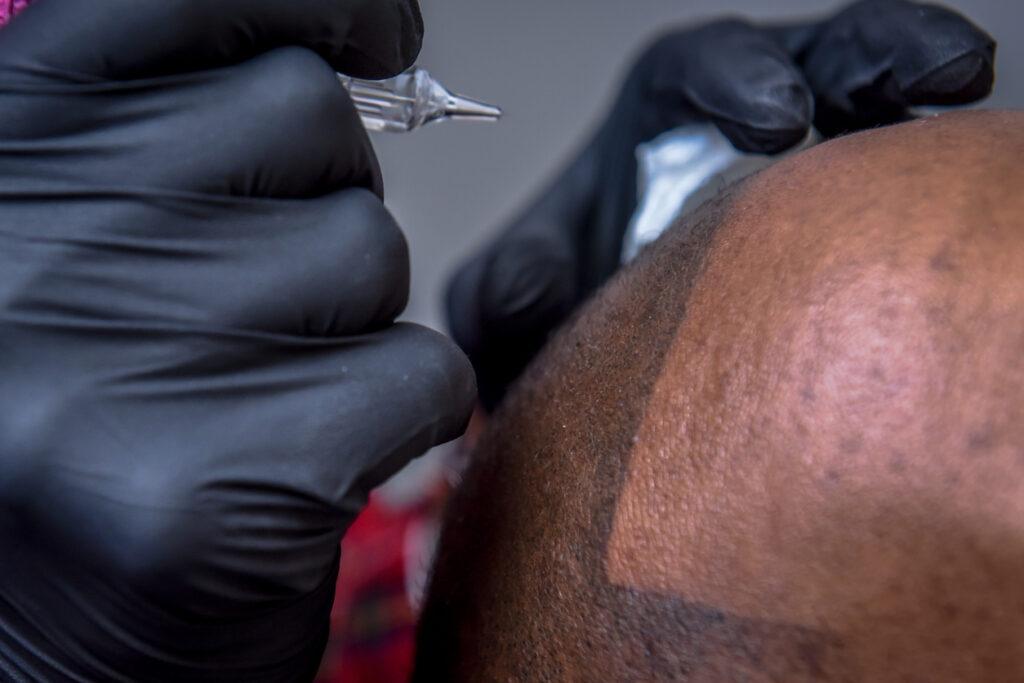
Scalp Micropigmentation for Hair Transplant Scars
One of the most effective uses of Scalp Micropigmentation is scar camouflage.
SMP can successfully conceal:
Linear scars from older FUT procedures
Patchy donor areas
Overharvested donor zones
Scars after Failed Hair Transplant cases
This makes Scalp Micropigmentation an essential option within Scar Revision strategies.
Scalp Micropigmentation for Different Hair Types
Scalp Micropigmentation can be adapted for various hair types and ethnic backgrounds.
At Emoria Clinic, SMP is customized for:
Afro Hair Transplant patients
Asian Hair Transplant candidates
Blonde Hair Transplant profiles
Male and Female Hair Transplant patients
Pigment density, dot size and spacing are adjusted to match natural follicle characteristics.
Scalp Micropigmentation and Hairline Design
Hairline design is a critical aspect of Scalp Micropigmentation success. A natural hairline respects age, facial proportions and ethnic characteristics.
Overly sharp or artificial hairlines are avoided. Instead, Emoria focuses on:
Soft transitions
Natural irregularity
Long term age appropriate design
This approach ensures results remain realistic over time.
Why Choose Turkey for Scalp Micropigmentation?
Turkey has become a global hub for hair restoration and cosmetic scalp treatments. Patients from Europe, the UK and the Middle East choose Turkey for its balance of expertise and affordability.
Key reasons include:
Experienced specialists
Advanced techniques
International hygiene standards
Competitive Cost
Many patients combine SMP with other procedures as part of a Hair Transplant Holiday in Turkey.
Why Choose Emoria Clinic for SMP?
Emoria Clinic approaches Scalp Micropigmentation as both a medical and artistic procedure.
Key advantages include:
Experienced SMP practitioners
Individualized treatment planning
Natural result focused approach
Ethical consultation and realistic expectations
The clinic prioritizes long term satisfaction rather than short term cosmetic fixes.
Scalp Micropigmentation Cost in Turkey
The Cost of Scalp Micropigmentation in Turkey depends on:
Treatment area size
Number of sessions
Scar coverage requirements
Combination with other treatments
A personalized quote is provided after consultation to ensure transparency and appropriate planning.
References
Rassman, W. R., Pak, J. P., Kim, J., Bernstein, R. M. (2015). “Scalp micropigmentation: A useful cosmetic camouflage technique for hair loss.” Journal of Clinical and Aesthetic Dermatology, 8(9)
Shapiro, J., & Zari, S. (2018). “Camouflage techniques in alopecia: The role of scalp micropigmentation.” Dermatologic Clinics, 36(3)
Most patients report minimal discomfort. Topical numbing can be applied if needed.
When performed correctly, Scalp Micropigmentation creates a natural illusion of hair density or shaved follicles.
Scalp Micropigmentation does not replace hair transplantation but serves as an effective cosmetic alternative or complementary solution.